Showing posts with label book nerd. Show all posts

Saturday, November 9, 2013

October Book List


October 2013
Reading List

This month I did more cross stitching than any thing, so I didn't actually read many books.

It was  good month for audio books, as most that  I listened to were stellar and highly recommendable.


Books Read

  1. Anne of Windy Poplars (1936) by Lucy Maude Montgomery
    I am thoroughly enjoying this gentle series!
  2. Princesses Behaving Badly (2013) by Linda Rodriguez McRobbie
    Negative review coming soon.

Audio Books:


  1. The Lives of Christopher Chant (1988) by Diana Wynne Jones
    A reread; I love this series!
  2. Overture to Death (1939) by Ngaio Marsh
    I was fairly certain of the culprit early on, but enjoyed the narrative and characters tremendously.
  3. The Maltese Falcon (1930) by Dashiel Hammet
    I cannot believe how good this was!  I can't believe I waited so long to read it!
  4. Towards Zero (1944) by Agatha Christie
    Excellent mystery; kept me confused til the end.
  5. A Damsel in Distress (1919) by P.G. Wodehouse
    A delightful tale, typical of Wodehouse.  I knew from the first chapter what the happy endings would be, but that didn't lessen the enjoyment.
  6. Little Women (1868/9) by Louisa May Alcott
    I had only read a child's annotated version before this, and yet have devoured all I can find of her sensation stories, so the heavy, preachy tone surprised me.  I still enjoyed it, but not as much as I do her ridiculous thrillers.
  7. And Then There Were None (1939) by Agatha Christie
    A long-time favorite; this time I actually remembered "whodunnit", but still had a hard time believing it.  This is such a great mystery.
  8. The Cuckoo’s Calling (2013) by Robert Gailbraith
    This was an excellent book and I highly recommend it; well plotted, with excellent character development.  Looking forward to more in this series.
  9. Crooked House (1949) by Agatha Christie
    I figured out the murderer just a few pages before the startling answer was revealed; another highly recommended Christie. 
  10. The Silver Linings Playbook (2008) by Matthew Quick
    I strongly identified with Pat.  This book was beautiful, funny and poignant.  I recommend it universally.  I will say this, though: I looked at a few of the film clips and from what I could tell, the movie took pivotal, beautiful scenes and farce-ified them.  Read the book, skip the movie.
  11. The Black Angel (1943) by Cornell Woolrich
    Stunningly good noir; highly recommend.  This is my second time reading Woolrich and both were fantastic.
  12. The Marseilles Caper (2012) by Peter Mayle 
    I can't say that the book had a very riveting plot, and yet I kept listening to see what would happen next.  I enjoyed it enough that I'm planning to read another of this series.


Wednesday, October 9, 2013

The Classics Club: "Breakfast at Tiffany's" by Truman Capote


.
I first read "Breakfast at Tiffany's" in high school, after I saw and fell in love with the movie.  I found the novella a sad disappointment, as it wasn't like the movie, so promptly pushed it out of my mind.

As an adult, I wasn't so impressed with the movie--the horrible portrayal of Mr. Yunioshi in particular and pretty much everything else in general--so I began to think maybe I needed to reread the novella and see what Capote really intended.

I'll confess, I'm just as unimpressed as I was some twenty years ago, though not for the same reasons.

Louise Brooks


Frankly, very little.

I did think that Holly looked (not at all like Audrey Hepburn, but) like a blonde Louise Brooks, with even fuller lips.  The description of her resembled Hepburn in no way whatsoever; I can't imagine why she was cast.  Having set it in the present day when they filmed it, the clothing and manners were all wrong in the movie as well; I was glad that I had the knowledge to be able to imagine the right clothing, hair styles and props that were suitable for the story.

I also thought what an unappealing character Holly was.  I had no sympathy for or connection with her at all, nor did I find the plot particularly interesting.

Capote's prose was fine, but not stellar, certainly not captivating enough to make this (to my mind) a classic.


With the exception of the final line, which generated a small bit of emotion due to Capote's obvious attempts to twang the heartstrings, I was unmoved.  Again, I'll say that neither plot nor characters interested me enough to have any feelings for them.


I'm sure Capote had a message or an impression he wanted left with the reader, but I was unable to find it.  I was not a good match for this book.  

To show just how unmemorable "Breakfast at Tiffany's" was to me, I will mention that I forgot it even existed in my literary world.  It was on my list for the Classics Club Spin, and it's number was the one that was spun.  I read it in mid-to-late September, but was so unmoved by it that I didn't add it to my list of books read and didn't think of writing up the notes until now.

My explanation of the Classics Club can be found here
and the Classics Club itself can be found here.


Tuesday, October 1, 2013

September Book List


Books Read:

  1. In Times Like These (1968) by Emilie Loring
    As I mentioned a month or so ago, I bought a huge box of Loring novels out of nostalgia.  I loved them as an early teen. The first one I read, Keepers of the Faith (1944), was simply terrible.  Not so much the plot (which was typical Loring), but the writing--it was DREADFUL.  This one was more what I remembered her novels to be like; she's no Nabokov, but she (generally) writes a readable, pleasant, if predictable, fluff novel.
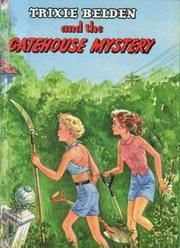
  2. The Gatehouse Mystery (1951) by Julie Campbell
    As I've mentioned earlier, I'm rereading this series; it was my favorite as a child and I recently purchased a complete set.  I'm surprised at how much I am enjoying them, even as an adult.  
  3. The Frightened Wife and other murder stories (1953) by Mary Roberts Rinehart
    Some of these stories were particularly good, others just good.  I enjoy sensationalism, and Rinehart did it well.
  4. Great Black Kanba (1944) by Constance and Gwenyth Little
    Another gem by the Little sisters, and my favorite so far.  I love the humor in their books, and the mysteries are generally well-plotted.  Excellent reading!
  5. The Best Man (1914) by Grace Livingston Hill
    A story typical of it's time with a strong hero and delicate heroine, and a gentle and improbable plot.  Hill's novels are part of my nostalgic, return-to-childhood reading, as they were a favorite in my early teens.  
  6. Breakfast at Tiffany's (1958; novella) by Truman Capote
    Will write up my thoughts soon, but can say I was disappointed.

Audio Books:
  1. Postern of Fate (1973) by Agatha Christie
    This is the final Tommy and Tuppence novel, as well as the last book Christie penned.  For the first time, I was truly disappointed by one of her mysteries.  It was often repetitive and convoluted and seemed to contradict information about the Beresford's given in earlier novels.  On top of that, Hugh Fraser (my all time favorite audiobook reader) did a barely passable job.  It was often hard to tell who was speaking, which is so unlike his usual talent that I was shocked.
  2. The Two Destinies (1876) by Wilkie Collins
    I am not ashamed to admit that I adore the novels of Wilkie Collins.  While I've yet to become a fan of Dickens (I'll be willing to give him yet another try later in this decade of my life), the sensational (as a genre, not just an adjective) fiction of Collins totally immerses me.  Filled with the supernatural, the inexplicable, with thwarted love, and thoroughly Victorian heroines, this one is typical of his work and I loved every minute of it.  (Samuel West did a sterling job reading it, too.) 
  3. The Colour of Magic (1983) by Terry Pratchett
  4. The Light Fantastic (1986) by Terry Pratchett
    I'm rereading this favorite series through audio book.  The first two are, as fans know, not a true example of his talent, but they are good background for the series and still funny as all get-out (whatever that means).
  5. Murder is Easy (1939) by Agatha Christie
    Despite having read this before, and being fairly certain of the identity of the murderer, I still found myself wavering under the clues.
  6. The Girl in Blue (1970) by P.G. Wodehouse
    A non-Jeeves novel that was light and fun; typical Wodehouse.
  7. The Adventures of Sherlock Holmes (1892) by Sir Arthur Conan Doyle
    I think that Doyle is at his best writing short stories, at least as far as Holmes is concerned. 
  8. Brideshead Revisited (1945) by Evelyn Waugh
    I can not express how much I love this book.  I have read it numerous times; it's one of my top five favorites,.  This isn't typical of his other works (which I still enjoy) but is much more introspective and exquisite.  If you've not read it, you should. 
  9. Equal Rites (1987) by Terry Pratchett
    The Discworld evaluates gender equality and Granny Weatherwax is introduced; love this one!
  10. The Hidden Staircase (1930) by Caroline Keene
    I continue my Nancy Drew refresher course. . .  It's no Christie, but it kept me entertained.
  11. Mort (1987) by Terry Pratchett
    Another reread of the Discworld series--my literary comfort food.  Death takes on an apprentice but, naturally, things don't work out quite the way either planned.
  12. Past Tense (2010) by Catherine Aird
    She writes with a style similar to P.D. James, only a little more on the cozy side.  I had the solution figured out early on, but it was interesting to see the story evolve.
  13. The Case of Jennie Brice (1913) by Mary Roberts Rinehart
    It started off with the solution obvious, and yet took enough twists and turns to make it an interesting tale.
  14. The Seven Dials Mystery (1929) by Agatha Christie
    I'm not usually a fan of international conspiracies, but was pleasantly surprised by both an engaging plot and an unexpected ending.

Thursday, September 26, 2013

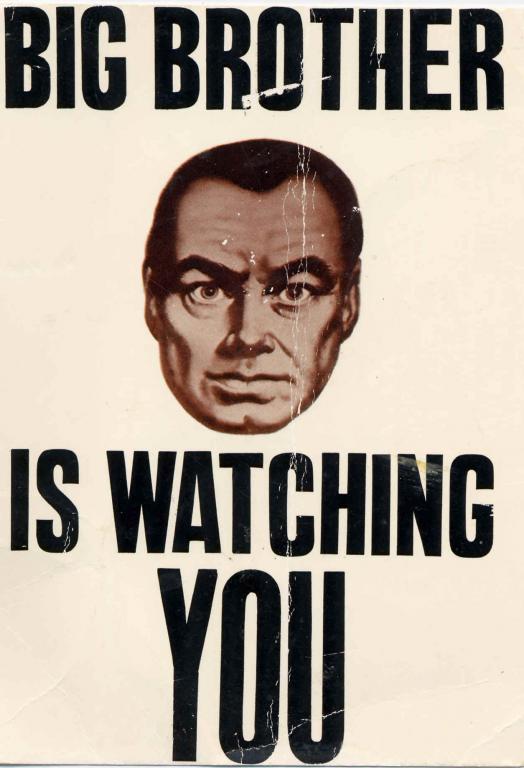
The Classics Club: Nineteen Eighty-Four by George Orwell


.
Nineteen Eighty-Four is one of those classics about which references are always being made, and it seems like everyone has a general idea of the plot, whether or not they've read it.

I knew it was one that I needed to read, but had always put it off, thinking it would be too depressing.  I am so glad I finally read it and recommend it wholeheartedly.  If you've not read it, make this the next book you do read!


While Orwell's dystopia is a terrible place, the book was not so much distressing as thought-provoking.  Like Bradbury's Fahrenheit 451, I also found it disturbingly prophetic.  NewSpeak made me think of the horrible text message shorthand, and the Ministry of Peace was frighteningly similar to the way current governments present the need for war.  As for the Two Minutes Hate. . . How often have we seen a more subtle version of this in the recent past?!

I thought a great deal about how easily people can be "brain-washed" into living in horrid situations or doing vile acts by the government or other powerful institutions--good people, too, with honest intentions who think they are doing the right thing.

I thought about the fact that Orwell wrote this not long after the ending of World War II, and how Hitler's Germany must have been foremost in his mind.

I also thought about the control of history; the victors always write (and sometimes rewrite) history.  This is nothing new, and continues to this day.


 I felt frightened at times, by how similar some of the situations were to today's society.

I was enthralled by Orwell's prose; I had expected it to be dusty, dry, and yet it was alive and relevant.

I felt so much sadness for Winston; he was so real to me that I was emotionally invested in his journey.

I did feel confused by the Party requirements, and struggled to comprehend it fully.  I felt that it would have been better if Orwell had given that explanation early in the book, and more completely.  However, who am I to judge?!  I assume he had an excellent reason for waiting as long as he did, and my lack of understanding  was the fault of the reader, not the writer.


"The horrible thing about the Two Minutes Hate was not that one was obliged to act a part, but that it was impossible to avoid joining in."


"Nothing was your own except the few cubic centimeters inside your skull."

"If the Party could thrust its hand into the past and say of this or that event, it never happened — that, surely, was more terrifying than mere torture and death?"

"The object of waging a war is always to be in a better position in which to wage another war."

"A peace that was truly permanent would be the same as a permanent war. This—although the vast majority of Party members understand it only in a shallower sense—is the inner meaning of the Party slogan: War is Peace."

"All rulers in all ages have tried to impose a false view of the world upon their followers."

"We know that no one ever seizes power with the intention of relinquishing it. Power is not a means; it is an end. One does not establish a dictatorship in order to safeguard a revolution; one makes the revolution in order to establish the dictatorship. The object of persecution is persecution. The object of torture is torture. The object of power is power."


"WAR IS PEACE
FREEDOM IS SLAVERY
IGNORANCE IS STRENGTH"


My explanation of the Classics Club can be found here
and the Classics Club itself can be found here.


Wednesday, August 7, 2013

The 4 Month Challenge, Part 12: Completed


This four month challenge ran from May through the end of August.  I really enjoyed finding books to fit into the categories, and look forward to the next one!


5 Point Challenges
  • Read the second book in a series
    Partners in Crime by Agatha Christie, the second in the Tommy and Tuppence mysteries. (July 2013/audio)
  • Read a book with water on the cover
    Down Among the Dead Men by Patricia Moyes 
    (June 2013)
  • Read a book with a colour in the title
    The Yellow Streak by Valentine Willaims 
    (May 2013)
  • Read  a book set in the 1900′s
    Mamur Zapt and the Return of the Carpet  by Michael Pearce, set in Cairo in 1908.  
    (July 2013/audio)
  • Read a book whose author name begins with M (First or last)
    Dead Men Don't Ski by Patricia Moyes 
    (May 2013)
10 Point Challenges
  • Read a book published during your birth year
    Transparent Things by Vladimir Nabokov, published 1972  (August 2013)
  • Read a book with a door, lock or key on the cover
    The Thirty-Nine Steps by John Buchan (July 2013/audio; thanks to the vintage cover pictured here)
  • Read a book with a flower/flowers on the cover
    Aunt Dimity's Death by Nancy Atherton 
    (May 2013)
  • Read a book with something ‘hot’ in the title (sun, fire, heat, etc)
    Flame and Shadow by Sara Teasdale (July 2013my discussion)
  • Read a book whose author name begins with J (first name only)
    Who Killed the Curate? by Joan Coggin 
    (May 2013)
15 Point Challenges
  • Read a book currently on a bestseller list
    The Ocean at the End of the Lane by Neil Gaiman  is #11 on the NYT list on 11 July 2013. 
    (July 2013/audio)
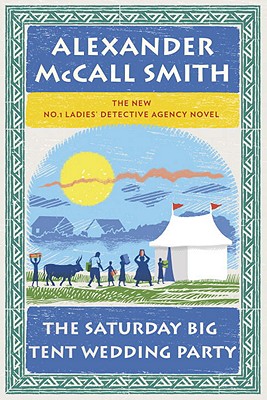
  • Read a book that shows a woman from behindThe Saturday Big Tent Wedding Party by Alexander McCall Smith (August 2013)
  • Read a book with a moon or stars on the cover  The Martian Chronicles by Ray Bradbury (July 2013; my discussion here)
  • Read a book with an adjective in the title
    The Case of the Gilded Fly by Edmund Crispin (May 2013)
  • Read a book whose author name begins with J (last name only)  Innocent Blood by P.D. James  (June 2013/audio)
20 Point Challenges
  • Read any book in one weekend (Friday to Sunday)
    Why Shoot a Butler? by Georgette Heyer 
     (June 2013)
  • Read a book with a child on the cover.
    The Secret of the Mansion by Julie Campbell. 
    (July 2013)
  • Read a book with over 400 pages
    The Book of Secrets by Elizabeth Joy Arnold; 464 pages.  (July 2013)
  • Read a book with an animal on the cover
    Wish You Were Here by Rita Mae Brown (June 2013/audio) 
  • Read a book whose author name begins with A (first or last)
    The Secret of Chimneys by Agatha Christie 
     (June 2013/audio)
Current point total: 250 points

Thursday, August 1, 2013

July Book List

July was a great month for reading--mainly because it was too hot to cross stitch under my bright (hot) lamp.

Books Read:
  1. The Mouse in the Mountain (1943) by Norbert Davis
    Very much enjoyed this well-written blend of the hard-boiled detective with a '40's screwball comedy.
  2. The House without a Key (1925) by Earl Derr Biggers
    The first Charlie Chan mystery, set in Hawaii of the 1920's.  I enjoyed it much more than I anticipated; Biggers developed the characters nicely--with the exception of Chan, who played a minor role.
  3. The Book of Secrets (2013) by Elizabeth Joy Arnold
    My review is posted here.
  4. Becoming Myself: Embracing God's Dream of You (2013) by Stasi Eldredge
    My review is posted here.
  5. The Barakee Mystery (1929) by Arthur Upfield
    Characters were nicely fleshed out and the narrative was detailed and surprisingly good.  I will certainly read other mysteries by Upfield.
  6. The Secret of the Mansion (1948) by Julie Campbell
    The first in the Trixie Belden series.  I adored these books as a preteen, so I'm doing a reread of the series. 
  7. The Case of the Velvet Claws (1933) by Erle Stanley Gardner
    My first Perry Mason mystery and wasn't at all what I expected.  Mason is a sort of soft version of the hard-boiled noir detective (soft-boiled?) and I enjoyed it tremendously.
  8. From This Dark Stairway (1931) by Mignon Eberhart
    Another enjoyable hospital murder mystery. I'll admit, I never once suspected the guilty party, though it all made perfect sense when all the pieces fell in place.
  9. Flame and Shadow (1920) by Sara Teasdale
    My discussion is posted here.
  10. The Red Trailer Mystery (1950) by Julie Campbell
    The second book in the Trixie Belden series.  I'm surprised at how good they still are; then again, it could just be because they are "comfort food" books.
  11. The Black Honeymoon (1944) by Constance and Gwyneth Little
    Another darkly funny mystery by these sisters; not as excellent as the other two I've read, but still good.
  12. Keepers of the Faith (1944) by Emilie Loring
    Loring was a favorite of my pre- and early teen years.  I've been nostalgic lately for the books of my childhood and bought a box of her novels recently.  This was the first I've read in well over twenty years.  I expected it to be hokey, but it wasn't all that bad; it was written during WWII and I always enjoy glimpses into that era.  It was, however, rather poorly written.  I don't know if Keepers is typical of her writing style, and plan to read at least one more (this time I'll pick one I had read and loved before) to see if they are all like this one before I give up on them.
  13. The Martian Chronicles (1950) by Ray Bradbury
    Wow!  My discussion is here.
  14. The Penguin Pool Murder (1931) by Stuart Palmer
    A delightful mystery introducing Hildegarde Withers.  I knew the killer early on, and I took umbrage at 39-year-old Miss Withers being described as middle aged (now 41 myself, I see things a bit differently), but the pleasure of the reading experience far outweighed any negatives I found. I look forward to reading more of this series.
  15. The Last Days of Ptolemy Gray (2010) by Walter Mosley
    What should have been a sad, melancholy story was not; well written, believable characters, engrossing plot.

Audio Books:
  1. Night Has a Thousand Eyes (1945) by Cornell Woolrich
    I couldn't connect to two of the main themes of this novel (near obsessive parent/child love and a paralyzing fear of death) and yet I was drawn into the story because of his power of narration and vivid word pictures.
  2. Mamur Zapt and the Return of the Carpet (1988) by Michael Pearce
    Set in British "advised" Cairo in the early twentieth century; enjoyable plot and interesting characters.  Will doubtless read others in the series.
  3. The Ocean at the End of the Lane (2013) written and read by Neil Gaiman
    Magical, terrifying, awe-inspiring and wonderful.
  4. Partners in Crime (1929) by Agatha Christie
    Another highly improbable, thoroughly enjoyable Tommy and Tuppence mystery.  Christie makes references to the popular fictional detectives of the time, including a hilarious poke at her own Poirot.
  5. The Hundred-Year-Old Man Who Climbed Out the Window and Disappeared (2009) by Jonas Jonasson.
    I can't begin to say how much I enjoyed this book!  Allan Karlsson, with his sunshiny disposition and incredible adventures, was a fantastic, likable character.  Yes, the book was improbable, but it was extremely fun.  I highly recommend this one.
  6. Every Crooked Nanny (1993) by Mary Kay Andrews
    Another chick lit/Southern/mystery by Anderson, which I am sort of embarrassed to be caught reading (listening to?) and enjoying, but nonetheless, I did both.
  7. If You Ask Me (and Of Course You Won't) (2011) written and read by Betty White
    A set of short, cute vignettes--just what one would expect from Betty White.  It was especially fun to listen to it, as she made it very personal, as though she were conversing with the listener instead of reading.
  8. The Thirty-Nine Steps (1915) by John Buchan
    my discussion here
  9. N or M? (1941) by Agatha Christie
    As is typical of the Tommy and Tuppence mysteries, this is a rather unbelievable, national espionage story.  As is also typical of the Tommy and Tuppence novels, it is delightful.  My only quibble was that the reader (this was sadly not the Hugh Frasier version) didn't seem to have any experience with children; his voice for a child of two was atrocious!
  10. A Study in Scarlet (1887) by Sir Arthur Conan Doyle
    The first Holmes novel and worth reading only for the introduction of Holmes to Watson, not for plot or solution.
If you aren't swooning over this dangerous,
dashing Captain, you must be dead.


Massive Disappointment of the Month award goes to my attempt to read the fourth book in the Burton and Swinburne series by Mark Hodder.

I had been looking forward to the Secret of Abdu El Yezdi since last April, when I finished the Expeditions to the Mountains of the Moon, with it's rather murky ending.  I was excited to have it all cleared up and go on adventuring with my favorite real life hero and now steampunk novel hero, Captain Sir Richard Francis Burton.

I was stunned when I was unable to fall right into this book. It just didn't grab me; I found it too dark, confusing. . .  I was afraid it was a dud.

However, other reviewers that are also lovers of this series are giving this new one high praise.

I am going to assume then, that I just wasn't in the mood for Burton (WHAT?!?!), that for some reason the time wasn't right.  Or maybe it's just that it didn't start out doing what I wanted, i.e. explaining the ending of Mountains of the Moon.

Anyway, my plan now is to reread the first three books (visually this time, as I did audio last time), making sure I remember everything and am in the right steampunky mood, and then start this one.

It's just so disappointing to have looked forward to it for so long and then to find it unreadable!

I still highly recommend the first two of this series (The Strange Affair of Spring-Heeled Jack and The Curious Case of the Clockwork Man), and a bit less highly the third.  I recommend even more highly that you read about the real Burton, an amazing man that no fiction could contain.  As a tantalizing morsel, I'll just say that the scar is from a lance that went through both cheeks!  The story is better than a Haggard tale!


Tuesday, July 23, 2013

The Classics Club: The Thirty-Nine Steps by James Buchan


.
Despite never actually having read Buchan's The Thirty-Nine Steps (1915), I was familiar with it as one of the earliest hero-on-the-run suspense-thriller-mysteries, and one that was influential on the genre as a whole.  I take a historical interest in my favorite genre, and felt I needed to read it.


What a grand adventure!  I had to think that this is the precursor to those heroes so prevalent in today's thrillers (you know, the ones that get out of bed, get beat up, shot, drowned and beat up again all before they take the dame back to bed) but yet it didn't seem hokey.  Hannay was just this side of believable, like a hero should.  He was crush-worthy for the female reader and role model-worthy for the males.

The action of this book takes place just before the Great War starts (but is written after the War started, so it is written with the knowledge that the War will start, if that makes sense) so it also made me think a lot about the War, about patriotism during that War, and about how this book would have been the most excellent sort of propaganda.  It depicts an average man who realizes the fate of Great Britain, if not the world, rests on knowledge he has, so he steps up to the plate and does what he can.  I hate to borrow the overused phrase "stiff upper lip" for Blighty, but that is exactly it. Hannay is willing to die--even as an expatriate Scotsman just over from Rhodesia--to protect home and country.  Just an average guy (okay, maybe a little above average in strength and endurance but we'll not quibble) and he single-handedly beats the Germans at their own game.  Pretty good stuff to be reading in the muddy, infected, hell-on-earth trenches.

So yes, I started thinking about what a fun adventure it was, and ended by mourning the slaughtered Tommys who probably died a little happier for having read this.


 I suffered nostalgia for a time I've never experienced--that time, right before the Great War, when a speeding car went 40 mph and putting on working man's clothing could disguise a gentleman, when airplanes were a novelty and to be hatless was unconscionable.   I felt sad for the innocence that was lost in that War, sad that books like this--new as it was--would only have a few more years to exist, a few more years before violence and sex become the staples of fiction.  (Let me note here that there is no romance in this book--not even one slightly attractive woman.  How refreshing!)

I felt patriotic, too, for a country that isn't mine, for a cause that is hard to remember.

I also felt a longing for Scotland.  Apparently Buchan was Scottish; his descriptions of Scotland are lovely.  I've always wanted to visit and the mental images of Hannay's on-foot adventures to the highlands (or was it the lowlands?) added fuel to that flame.

Most of all, though, I felt satisfied by a good read.  It was a darn good yarn, and I enjoyed every moment of it--and for some reason, especially the ginger biscuits.  I'll never eat gingersnaps without thinking of Hannay hiding in the heather, munching on ginger biscuits.


Patriotism!  This was the subtle undertone and blatant overtone throughout the entire book.  Even an expatriate will answer the call to save Great Britain when it comes, because of natural patriotism.

 It is a level of dedication and love for country that I don't think we, in the U.S., will ever experience again. As such, it was almost a novel idea to me, here in this skeptical, cynical age.


My explanation of the Classics Club can be found here
and the Classics Club itself can be found here.

Wednesday, July 17, 2013

The Classics Club: Flame and Shadow by Sara Teasdale


 I first read Sara Teasdale as an immature 11 or 12 year old, and then multiple times in my (still immature)  mid-teens.  It has been many years since I have read any of her poetry, and I was curious as to whether my reaction would be much different than it was all those years ago.  I chose the volume Flame and Shadow (1920), as opposed to her Pulitzer Prize winning 1919 Love Songs, to fit in with a reading challenge.

Sara Teasdale


First off, I was interested in how the title, Flame and Shadow, fit in with the poems.  I noticed several direct references to flame and fire, as well as indirect references to the fires of romantic love.  The "shadow" theme was more subtle, referencing the shadows of pain, loneliness and depression that is evident throughout many of the poems in the volume.

I was still drawn to her poems, but not often  to the same ones that I had loved as a child.  I also saw a depth that I had not seen, recognized (and empathized with) her depression and also understood more of the (now historical) allusions.

I found it surprisingly hard to accustom myself to her more traditional, lyric style, after years of reading modern free verse.  I had to change my mindset, and not think it juvenile (as modern poets often want readers to believe) that her couplets rhymed.

 I was immediately caught up in her word pictures, and could easily visualize the scenes she described.  Teasdale and I share a love for the moon, winter and night, and I felt the feeling I feel when I am walking in the moonlight on a winter's evening.  I also felt the depth of her depression and loneliness in several of the poems.

I wasn't as interested in her love poems, as I have become jaded in my old age and find myself feeling superior to the love poetry.  I don't know why; I'm just explaining the feeling I get, and certainly am not justifying it or even saying I'm right. Despite that, I did feel compassion for her while reading several of them, and even found a connection to some of the more "happy" love poems.  This shows the power of her verse, I think, that it can transcend time and ennui to create a connection.

"There Will Come Soft Rains" was one of my favorites, long before I understood that it referred to the tragedy of the Great War's trenches or to the historically early idea of warfare wiping out man, and decades before I read Bradbury's short story of the same name.  As a result of coming to understand the poem in historical context, and loving the Bradbury story, I have a deeper love for this particular one.


"There Will Come Soft Rains"

Explanation of the Classics Club can be found here
and the Classics Club itself can be found here.
There will come soft rains and the smell of the ground,
And swallows circling with their shimmering sound;

And frogs in the pools, singing at night,
And wild plum trees in tremulous white,
Robins will wear their feathery fire,
Whistling their whims on a low fence-wire;
And not one will know of the war, not one
Will care at last when it is done.
Not one would mind, neither bird nor tree,
If mankind perished utterly;
And Spring herself, when she woke at dawn,
Would scarcely know that we were gone.

Sunday, July 7, 2013

Summer 2013 Book Challenge

30 August 2013--Completed!  

I found yet another appealing book challenge, through Bev at My Reader's Block.


The Summer 2013 Book Challenge from Semi-Charmed Life has caught my fancy.  I don't know if I'll finish all of the challenge, but I always find it enjoyable to stretch myself with reading goals.

Rules:
  • The challenge will run from July 1, 2013, to September 30, 2013. No books that are started before 12 a.m. on July 1 or finished after 11:59 p.m. on September 30 will count.
  • No re-reads (unless specifically stated)! I want you to experience new books with this challenge.
  • Each book must be at least 200 pages long. Audiobooks are fine, as long as the print versions meet the page requirements.
  • A book can only be used for one category. If you want to switch the category later, that's fine, just be sure to account for that in your point total.

The Challenge:

  • 5 points: Freebie! Read any book you'd like, as long as it follows the above rules. :)
    The Barakee Mystery by Arthur Upfield; 336 pages.  (July 2013)
  • 5:  Read a book that is less than 150 pages long.
  • The Thirty-Nine Steps by John Buchan; 148 pages (July 2013/audio)
  • 10: Read a book with a color in the title.
    The Last Days of Ptolemy Grey by Walter Mosley; 288 pages (July 2013)
  • 10: Read a book that is not the first in its series. (And yes, it must be in a series.
    The Saturday Big Tent Wedding Party (12th in the series) by Alexander McCall Smith; 240 pages (August 2013)
  • 15: Read a book it seems everyone but you has read! 
    The Martian Chronicles by Ray Bradbury; 256 pages.  I was late in "discovering" Bradbury--it seems that all my fellow fantasy and sci fi literary nerds had read this long ago! 
    (July 2013)
  • 15: Read a banned book.
    Nineteen Eighty-Four by George Orwell, 267 pages.(August 2013/audio) 
  • 20: Read a book written by a celebrity. 
    If You Ask Me (And of Course You Won't) by Betty White; 272 pages (July 2013/audio)
  • 20: Read a non-fiction book that is not a memoir.Becoming Myself: Embracing God's Dream of You by Stasi Eldrige; 256 pages; Christian Living nonfiction. (July 2013) My review is posted here.
  • 20: Read a book that takes place in a state you have never been in. 
    The House without a Key by Earl Derr Biggers.  Takes place in Hawaii; 240 pages.  (July 2013)
  • 25: Read a book that is at least 400 pages long.
    The Book of Secrets by Elizabeth Joy Arnold; 464 pages.  (July 2013)
  • 25: Read a book with a main character who shares your first name.
    The G-String Murders by Gypsy Rose Lee, 209 pages. Main character is Gypsy herself and though we spell it differently, I thought it would be close enough! (August 2013)
  • 30: Read a book written by an author who was born in or died in your birth year.
    The Barn Owl's Wondrous Capers by Sarnath Banerjee; 280 pages; born in 1972. 
    (August 2013)
(I have condensed the challenge descriptions to save space; go to the original challenge page for more details.)

Saturday, July 6, 2013

The Classics Club

Oh my gosh!  I just discovered the Classics Club!

(I hear ya. . . This is supposed to be a blog where I am encouraging myself in my housework, organization and crafts--not an outlet for my book obsession.    Well, I am doing that!  I'm just doing this too!)

Here are the basic rules of The Classics Club:
  • choose 50+ classics
    I have choosen 50; the ones denoted with an asterisk are rereads.
  • list them at your blog
    Tada!
  • choose a reading completion goal date up to five years in the future and note that date on your classics list of 50+ titles
    I'm setting the goal to have read my 50 by 6 July 2018, which is less than one classic a month.  The Classics Club stresses that this is a "living list/goal" and as such it the list can grow, the goal date can be extended. . . the point is to read and grow with the classics. 
  • write about each title on your list as you finish reading it, and link it to your main list
    The point of this is not to write reviews (which is good, as I got so burnt out reviewing), but to initiate discussion by writing about "your reading thoughts".
They also do an occasional (monthly?) "lucky spin".  Members are invited to make a numbered list of 20 of the books still to be read.  A number is given, and members read the book that corresponds to that number.  I like that idea too.


update: I have begun to add more to the list as I think of them, increasing my list from the original 50.  My goal is still the same, though: to read 50 of these before 6 July 2018.  I am making good progress, but don't want to change my goal date in case I can't keep on at this pace.  


Here's my list of classics that I've somehow missed, planned to read but just never did, or that I am longing to reread:
  1. Flatland by Edwin Abbott
  2. Little Women by Louisa Mae Alcott*
  3. Peter Pan by J.M. Barrie
  4. Songs of Innocence and Experience by William Blake*
  5. The Illustrated Man by Ray Bradbury 
  6. The Martian Chronicles by Ray Bradbury  (my discussion)
  7. The Thirty Nine Steps by John Buchan  (my discussion)
  8. A Princess of Mars by Edgar Rice Burroughs
  9. Breakfast at Tiffany's by Truman Capote*  (my discussion)
  10. The Postman Always Rings Twice by James Cain
  11. The Big Sleep by Raymond Chandler
  12. The Pioneers by James Fenimore Cooper
  13. Robinson Crusoe by Daniel deFoe
  14. Do Androids Dream of Electric Sheep by Philip K. Dick
  15. A Tale of Two Cities by Charles Dickens
  16. The Wasteland by T.S. Eliot*
  17. North and South by Elizabeth Gaskell
  18. Herland by Charlotte Perkins Gilmore
  19. The Wind in the Willows by Kenneth Grahame
  20. Allan Quartermain by H. Rider Haggard
  21. She by H. Rider Haggard
  22. The Maltese Falcon by Dashiell Hammett
  23. Iliad by Homer*
  24. Odyssey by Homer*
  25. The Phantom Tollbooth by Norton Juster
  26. Uncle Silas by Sheridan Le Fanu
  27. Phantom of the Opera by Gaston Leroux
  28. Till We Have Faces by C. S. Lewis*
  29. The Monk by Matthew Lewis
  30. At the Back of the North Wind by George MacDonald*
  31. The Princess and the Goblin by George MacDonald
  32. The Four Feathers by AEW Mason
  33. I Am Legend by Richard Matheson
  34. Anne of Windy Poplars by Lucy Maud Montgomery
  35. Anne's House of Dreams by Lucy Maud Montgomery
  36. Anne of Ingleside by Lucy Maud Montgomery
  37. Nineteen Eighty-four by George Orwell  (my discussion)
  38. Transparent Things by Vladimir Nabokov
  39. The Little Prince by Antoine de Saint-Exupery
  40. Franny and Zooey by JD Salinger*
  41. Nine Stories by JD Salinger
  42. "Raise High the Roof Beam, Carpenters" and "Seymour: an Introduction" by J.D. Salinger
  43. Flame and Shadow by Sarah Teasdale*  (my discussion)
  44. The Hobbit by JRR Tolkien*
  45. A Confederacy of Dunces by John Kennedy Toole*
  46. The Warden by Anthony Trollope
  47. Five Weeks in a Balloon by Jules Verne
  48. The Mysterious Island by Jules Verne
  49. Breakfast of Champions by Kurt Vonnegut
  50. Cat's Cradle by Kurt Vonnegut
  51. The Island of Doctor Moreu by HG Wells
  52. The Time Machine by HG Wells*
  53. East Lynne by Ellen Wood
  54. Orlando by Virginia Woolf
  55. A Room of One's Own by Virginia Woolf
  56. Beau Geste by P.C. Wren
  57. Swiss Family Robinson by Johann Wyss

Friday, July 5, 2013

My Friday Fives


In an effort to reflect more positively on what I accomplish and to plan goals more reasonably, I'm going to start writing out My Friday Fives.


Fox and Puffballs--my favorite so far!

  1. Used and reviewed the gluten free sugar cookie mix I got from the Amazon Vine program.  
  2. Cleaned the living room of cobwebs, as well as the living room ceiling fan--and decorated it with Washi Tape.
  3. Reorganized my embroidery floss into my own system.  I'm hopeful this will work better for me! 
  4. Caulked around the backstop of the tub.
    It's not pretty. . . it's not even homely (!) but it will do.  (I hope!)
  5. Completed the July portion of the  The Frosted Pumpkin's Woodland Sampler.


  1. Received many, MANY books in the mail this week!
  2. Received several gifts of home-grown veggies: tomatoes, cucumbers, beans and peppers.  I am so blessed!
  3.  I got four new, fantastic body sprays from Hip Hop Candy: Unicorn Poo, Angel Bunny, Frosted Cupcake and Sugared Bamboo.  I just adore all their fragrances--I go around spraying myself with different ones all through the day. 
  4.  St. John asked for a belly rub for the first time!
  5. Better electrical wiring, thanks to my husband and his friend!  Now I can use the chest freezer we bought with our income tax return!

Two ARCs from Amazon Vine and
15 vintage mysteries that were pretty much stolen from an ebay seller.
I am the half proud, half embarrassed owner of 36 cheesy romantic suspense novels by Emilie Loring. (Another shamefully cheap deal from ebay.)  Loring was one of my favorites when I was a young teen, and I've been going through a phase of wanting to read the things I enjoyed so much during my young days. Of course, the true mystery of these books will be whether or not I will admit it on here when I read one!


  1. Use and review the gluten free sugar cookie mix I got from the Amazon Vine program.  Accomplished!
  2. Return to taking my photos every day.
    I have really done poorly with my photos over the past few months.  Last year, I achieved nearly one photo a day.  This year, my inspiration has been much lower.  
  3. Caulk around the tub.
    Accomplished! 
  4. Dust away the cobwebs in the living room.
    Accomplished!
  5. Complete the second week of The Frosted Pumpkin's Summer Sampler.
    The July portion of their Woodland Sampler came, and I finished it first.


  1. Find a home for the things that got stacked up on the chest freezer when the electricity went funky and the freezer was out of service. (Isn't it funny how any unused space becomes a place for stacking homeless objects?!?!)
  2. Read at least half of one of the ARCs I need to review.
    Accomplished!  Completed and reviewed one both of the books. (second review
  3. Return to taking my photos every day.  Trying this one again.  Photo-taking brings me joy; I want to reignite that spark.
  4. Sort through the box of things that I found in the cupboard above the refrigerator (that belong to my mother-in-law from when she lived in this house a loooong time ago).
    Woot!  Done!
  5. Sort through the coats for keepers and donations.


  1. books
  2. good doctors
  3. medication that works
  4. rainy days
  5. electricity